

 By
By In modern industrial piping systems, reliability and safety are non-negotiable. Industries such as oil & gas, petrochemicals, power plants, pharmaceuticals, shipbuilding, and chemical processing depend heavily on strong and durable piping components to ensure uninterrupted operations. Among these critical components, Buttweld Fittings play a major role in maintaining the strength, efficiency, and integrity of pipelines.
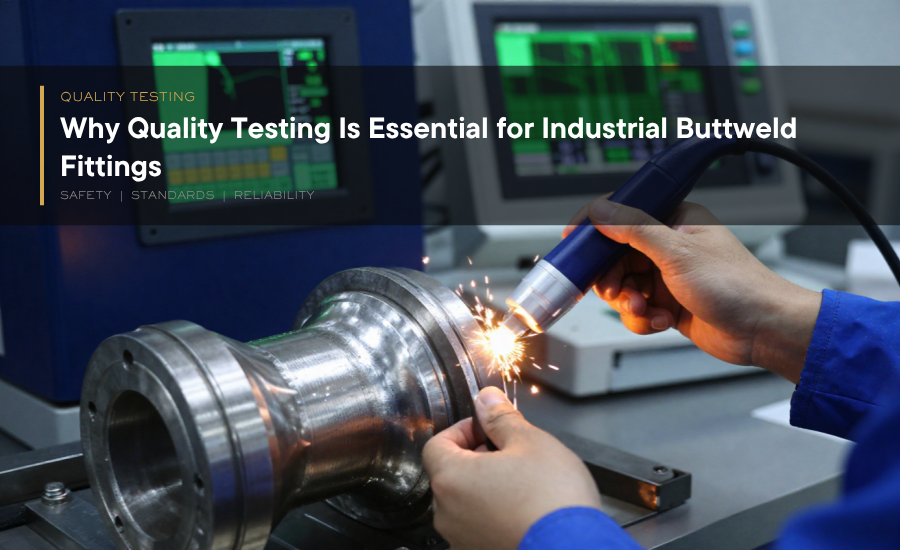
However, even the highest-grade materials can fail if proper quality testing is not performed. This is why quality assurance has become one of the most important aspects of industrial fitting manufacturing. From raw material inspection to final dimensional verification, every stage of testing helps ensure that buttweld fittings meet strict industrial and international standards.
Importance of Quality Testing in Industrial Applications
Industrial pipelines often operate under extreme conditions, including high pressure, high temperatures, corrosive chemicals, and continuous mechanical stress. Any defect in Buttweld Fittings can lead to leakage, system failure, costly downtime, or even serious safety hazards.
Quality testing ensures that every fitting can withstand these demanding environments without compromising performance. Reliable testing procedures help manufacturers identify defects early and maintain consistent product quality throughout production.
Ensures Strength and Durability
One of the primary reasons for testing Buttweld Fittings is to verify their mechanical strength and long-term durability. Industrial fittings must be capable of handling pressure fluctuations, vibration, and thermal expansion over extended periods.
Tests such as tensile strength testing, hardness testing, impact testing, and flattening tests help determine whether the fittings meet the required performance standards. These evaluations ensure that the fittings remain dependable even in harsh operating conditions.
Prevents Leakage and System Failure
Leakage is one of the most serious issues in industrial piping systems. Poor-quality fittings can result in weak joints, corrosion, or structural failure, leading to operational disruptions and financial losses.
Hydrostatic testing and non-destructive testing methods such as ultrasonic testing, radiographic testing, and dye penetrant inspection help detect internal and external flaws before the fittings are supplied to customers. These testing methods greatly reduce the risk of pipeline failures and improve overall system safety.
Maintains Dimensional Accuracy
Precision is critical in piping systems. Even a slight dimensional mismatch can create installation problems and affect the efficiency of the entire pipeline network.
Dimensional inspection ensures that Buttweld Fittings conform to international standards such as ASME, ASTM, ANSI, and DIN specifications. Proper dimensional accuracy also ensures easier installation, better alignment, and improved sealing performance.
Verifies Material Composition
Different industries require different material grades depending on the application. Stainless steel, carbon steel, duplex steel, and alloy steel fittings each offer unique properties and performance advantages.
Chemical composition analysis and PMI (Positive Material Identification) testing help confirm that the fittings are manufactured using the correct material grade. This prevents material mix-ups and ensures compatibility with industrial environments.
Supports International Standards and Certifications
Global industries now demand strict compliance with international quality standards. Manufacturers that follow comprehensive testing procedures gain higher credibility and trust in domestic as well as international markets.
Certified and thoroughly tested Buttweld Fittings are more likely to meet export requirements and project approval standards. This is especially important for industries where safety and reliability are critical.
Enhances Customer Confidence
Quality-tested products build long-term customer trust. Buyers prefer pipe fittings manufacturers who maintain strict quality control processes because it reduces operational risks and ensures consistent product performance.
Reliable testing also demonstrates a manufacturer’s commitment to engineering excellence, safety, and product reliability. This has become a major competitive advantage in today’s global industrial market.
Conclusion
Quality testing is not just a manufacturing process — it is a critical investment in safety, durability, and performance. Industrial pipelines operate in demanding environments where even small defects can result in major consequences. Proper inspection and testing ensure that Buttweld Fittings deliver maximum efficiency, reliability, and long service life.
As industries continue to demand higher standards, manufacturers who prioritize advanced quality control systems and rigorous testing procedures will remain the preferred choice for industrial piping solutions worldwide.