

 By
By India’s economy is expanding at an impressive pace, and at the core of this growth lies a powerful logistics network that keeps industries, businesses, and consumers connected. From raw material movement to last-mile delivery, efficient transportation plays a vital role in ensuring uninterrupted trade and commerce across the country. Today, both road transportation services and rail transportation services are transforming how goods move throughout India, creating faster, smarter, and more reliable supply chains.
As manufacturing, e-commerce, agriculture, and exports continue to grow, transportation services in India are becoming the driving force behind economic development and modern logistics infrastructure.
The Backbone of India’s Supply Chain Network
Transportation is one of the most critical components of any supply chain. Without efficient cargo movement, businesses face delays, increased operational costs, and reduced customer satisfaction. India’s large geographical landscape makes transportation even more important, connecting ports, industrial zones, warehouses, retail markets, and rural regions.
Modern transportation systems help businesses maintain smooth inventory flow, faster deliveries, and better market accessibility. Whether goods are moving across states or across the country, reliable logistics support is essential for maintaining business continuity.
The Growing Importance of Road Transportation Services
Among all logistics modes, road transportation services remain the most widely used in India. Trucks and commercial vehicles handle a major portion of domestic freight movement because they offer flexibility, accessibility, and door-to-door delivery convenience.
Road transportation supports industries of every size, including retail, FMCG, pharmaceuticals, construction, textiles, and agriculture. One of its biggest advantages is the ability to reach remote areas and connect businesses directly to customers and distribution centres.
With the development of highways, expressways, and industrial corridors, road transportation services have become faster and more efficient than ever before. Government initiatives such as Bharatmala and improved infrastructure investments are further strengthening the country’s logistics capabilities.
Technology is also reshaping road logistics. GPS tracking, route optimisation, digital freight management, and real-time shipment monitoring are helping businesses reduce transit delays and improve operational transparency.
How Rail Transportation Services Are Enhancing Logistics Efficiency
While road transport dominates short and medium-distance logistics, rail transportation services are becoming increasingly important for long-distance and bulk cargo movement. Railways provide a cost-effective and environmentally friendly solution for transporting large volumes of goods across India.
Industries such as steel, cement, coal, automotive, agriculture, and container logistics heavily rely on rail transportation for efficient cargo handling. Dedicated freight corridors and modern rail infrastructure projects are helping improve cargo speed, reduce congestion, and increase transportation capacity.
One of the key advantages of rail transportation services is their ability to handle bulk shipments at lower operational costs compared to road transport. Rail networks also reduce fuel consumption and carbon emissions, supporting sustainable logistics practices.
The integration of rail transportation with ports, container freight stations, and warehousing facilities is creating a more connected and streamlined supply chain ecosystem across India.
The Rise of Multimodal Logistics
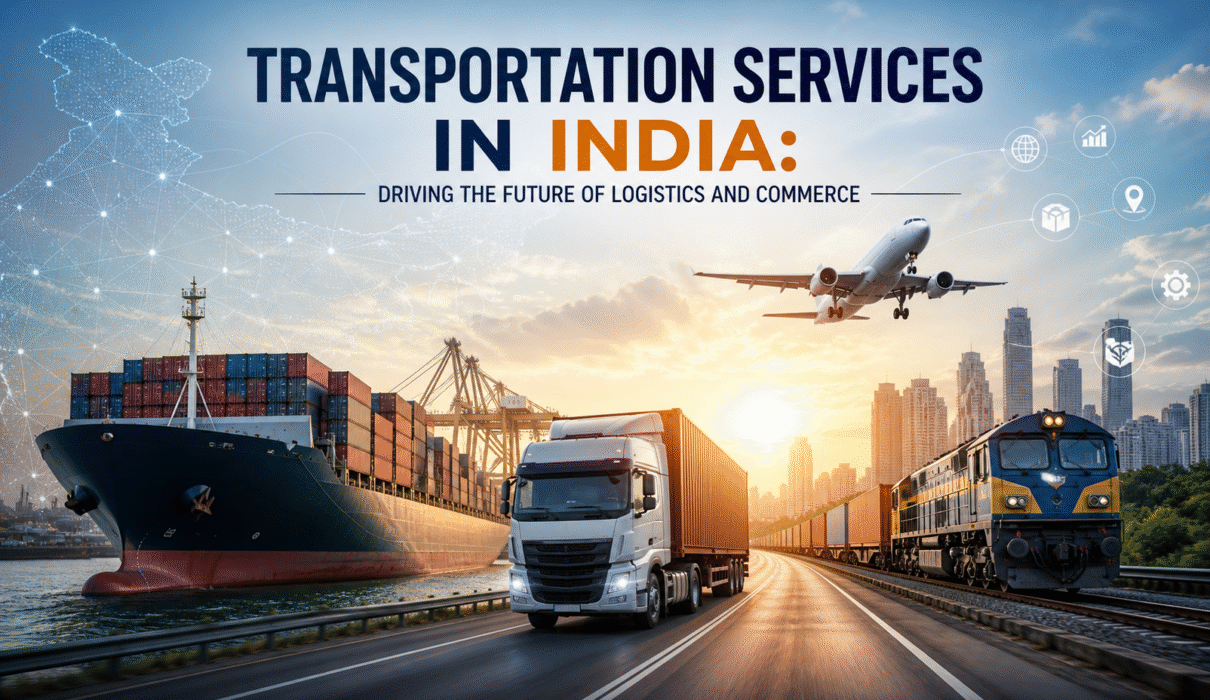
The future of transportation services in India lies in multimodal logistics — a system that combines road, rail, ports, and warehousing into one integrated network. Businesses are increasingly adopting this approach to improve delivery efficiency and reduce logistics costs.
For example, cargo arriving at ports may be transferred through rail transportation services for long-distance movement and then delivered to final destinations using road transportation services. This coordinated system minimises delays and improves cargo handling efficiency.
Multimodal logistics also supports faster export-import operations, helping Indian businesses compete more effectively in global markets.
Technology and Innovation in Transportation
Digital transformation is playing a major role in improving India’s transportation industry. Logistics companies are adopting advanced technologies such as artificial intelligence, fleet automation, IoT-enabled tracking, and predictive analytics to optimise operations.
Real-time visibility helps businesses monitor cargo movement, estimate delivery timelines, and improve customer communication. Smart transportation systems also reduce operational inefficiencies and help businesses make better supply chain decisions.
As technology continues to evolve, transportation services in India are becoming more data-driven, reliable, and scalable.
Conclusion
Transportation services are the foundation of India’s growing logistics and commerce sector. Both road transportation services and rail transportation services contribute significantly to keeping industries connected and supply chains operational.
While road networks provide flexibility and last-mile connectivity, rail systems offer efficient long-distance and bulk cargo transportation. Together, they are shaping a faster, more integrated, and future-ready logistics ecosystem for India.
As infrastructure development and technology adoption continue to accelerate, transportation services in India will remain a key driver of economic growth, trade expansion, and business success in the years ahead.